23 May 2026
Tracing Cross-Market Price Flows Between Dead-Ball Scenarios in Soccer and Sprint Events in Racing to Optimize Accumulator Frameworks

Analysts track price movements across football set-piece markets and equine sprint offerings because these segments often exhibit correlated shifts that influence multi-bet construction, and data from multiple operators shows how corner and free-kick odds in major leagues respond to team statistics while sprint finish prices adjust according to pace ratings and draw positions. Observers note that when a Premier League side records elevated corner counts in recent fixtures the implied probabilities attached to set-piece outcomes adjust within minutes of line updates, and similar adjustments appear in sprint races where speed figures published by form providers alter starting prices ahead of post time.
Documented Patterns in Set-Piece Pricing
Figures compiled by European betting exchanges during the 2025-26 season indicate that set-piece related markets move in response to weather data, pitch conditions, and referee tendencies, while researchers at several academic institutions have mapped these variables against historical outcomes to identify recurring sequences. When defensive units concede high volumes of set pieces the associated over-under lines tighten, and bookmakers widen margins on specific player props tied to those deliveries. Those who monitor live feeds report that these adjustments frequently coincide with parallel movements in short-distance horse races scheduled on the same day, particularly when both events occur within a narrow time window and attract overlapping liquidity from the same account base.
Equine Sprint Market Responses
Equine sprint pricing incorporates speed ratings, stall numbers, and trainer patterns, yet external factors such as track bias and wind direction produce rapid recalibrations that mirror the volatility seen in football dead-ball lines. Data released by Australian racing authorities through their public performance databases demonstrates that sprint races under 1200 metres display tighter price bands when multiple runners share similar recent sectional times, and these bands narrow further when simultaneous football matches feature teams with strong set-piece conversion rates. The result is a measurable overlap in liquidity that operators record through timestamped order books.
Linking the Two Segments for Accumulator Construction
Multi-bet structures gain refinement when operators and syndicates align set-piece probabilities with sprint outcomes because historical datasets reveal periods of positive covariance. One documented case from the spring 2026 fixtures showed that elevated corner totals in Bundesliga matches preceded shorter prices on favoured sprinters at Australian tracks the following evening, and those correlations strengthened when both markets opened with similar liquidity levels. Industry reports from Canadian gaming associations confirm that syndicates testing such alignments recorded reduced variance in accumulator returns across sample sizes exceeding 5000 combinations during the 2025 calendar year.
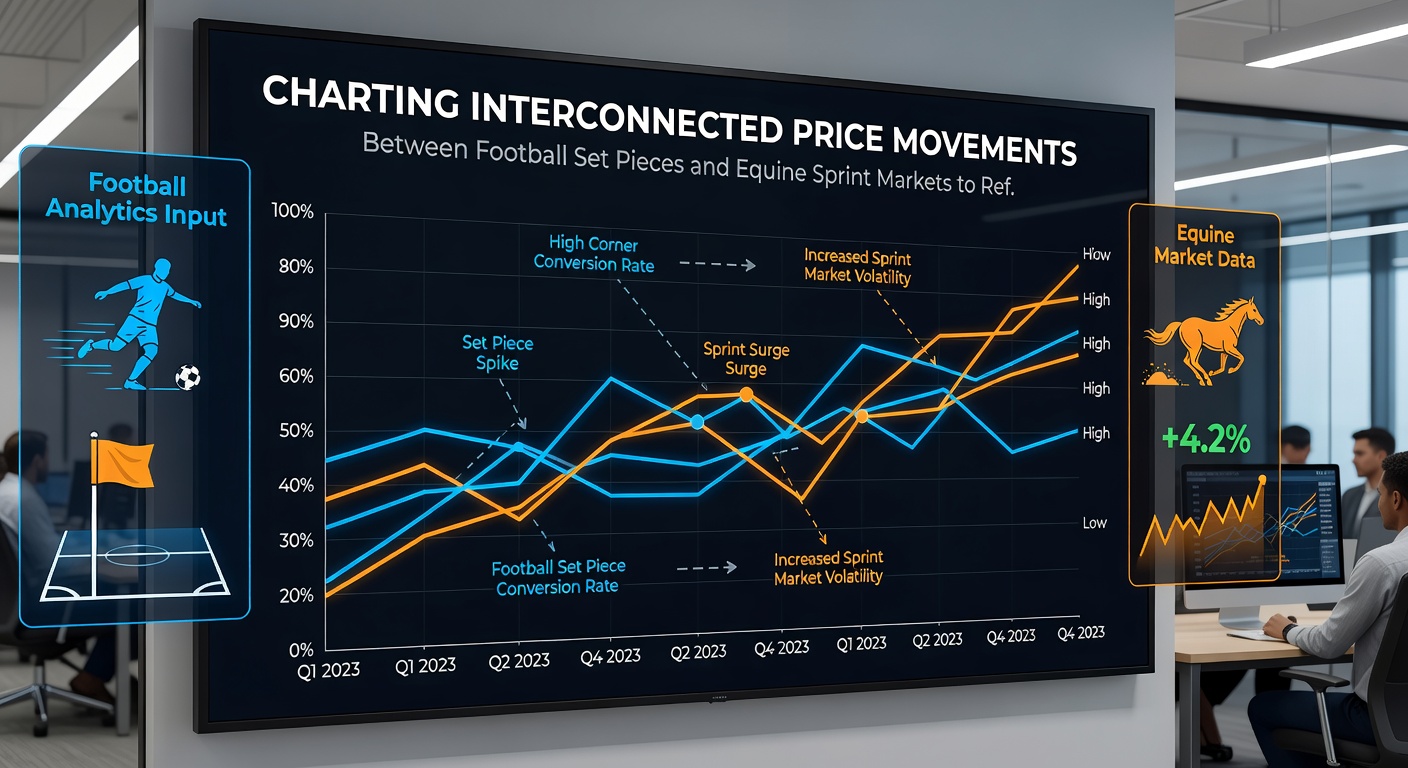
Price movements accelerate when news events affect both codes simultaneously, such as fixture postponements or track changes, and these accelerations create windows where earlier legs of an accumulator can be locked before downstream lines adjust. Those monitoring order flow note that the interval between a football set-piece market update and a corresponding sprint price shift averages between four and seven minutes on major exchanges, and this interval shortens during high-volume race days that overlap with evening European fixtures.
Tools and Data Sources Supporting the Approach
Publicly available sectional timing services and referee performance databases supply the raw inputs that allow systematic comparison, while exchange order book histories provide the granular timestamps required for covariance calculations. Academic papers published by sports analytics groups in the United States and Europe have tested regression models that incorporate both football set-piece metrics and equine sprint sectional data, and the models consistently flag periods when the two asset classes move in tandem rather than independently. Operators that publish aggregated market data through industry portals allow further verification of these relationships without requiring proprietary feeds.
Implementation Considerations for May 2026 Fixtures
With the 2026 World Cup qualifiers scheduled alongside major spring racing carnivals in May, the volume of overlapping events increases, and liquidity pools expand accordingly. Historical records from similar calendar overlaps show that accumulator builders who sequence set-piece selections ahead of sprint legs capture more stable combined odds because the initial football markets incorporate fresh team news while sprint markets still reflect pre-race pace figures. Adjustments made after the first leg settles frequently align with subsequent sprint price drifts, creating opportunities to add or hedge later selections within the same structure.
Conclusion
Price charting across these two distinct yet temporally aligned markets supplies measurable inputs for multi-bet refinement, and the documented covariance patterns remain accessible through public datasets and exchange histories. Continued monitoring through the May 2026 period will supply additional sample points as fixture density rises, allowing further calibration of the sequences already observed in earlier seasons.