Weather Whispers and Court Surfaces: Finding Edges in Variable Conditions for Racing and Tennis Wagers

Weather patterns shape outcomes in both horse racing and tennis, creating measurable shifts that influence performance metrics and betting markets throughout events held in June 2026. Data from the National Oceanic and Atmospheric Administration shows how precipitation, temperature fluctuations, and wind speeds alter track conditions in racing while simultaneously impacting ball trajectory and player movement on various court surfaces. Observers note that these environmental variables produce consistent statistical edges when tracked across multiple meets and tournaments.
Track Conditions in Horse Racing Under Changing Weather
Rainfall modifies turf firmness and moisture levels on racing surfaces, which directly affects stride length, speed ratings, and finishing times for different horse profiles. Studies from racing analysts indicate that soft or heavy ground favors stamina-oriented runners while disadvantaging those with sharp acceleration suited to firmer conditions. Temperature swings during early summer meetings further influence ground consistency, leading to price drifts in morning line odds as bettors adjust selections based on updated forecasts.
Wind direction plays a secondary role on exposed tracks, where gusts can alter jockey positioning during sprints and middle-distance races. Records compiled by industry data providers reveal that certain rail positions gain advantages when crosswinds push runners inward or outward depending on the bend configuration. Bettors who monitor real-time weather stations positioned near tracks gain access to granular updates that often precede official going reports released by clerks of the course.
Court Surface Responses in Tennis During Variable Conditions
Tennis courts react differently to humidity, heat, and precipitation based on their composition, with grass courts absorbing moisture faster than clay or hard surfaces. Research conducted through sports science programs at institutions like the University of Queensland demonstrates how increased humidity slows ball bounce on grass while accelerating wear patterns on clay during extended rallies. These surface-specific changes alter rally lengths and error rates, which in turn shift implied probabilities in live betting markets for set and match outcomes.
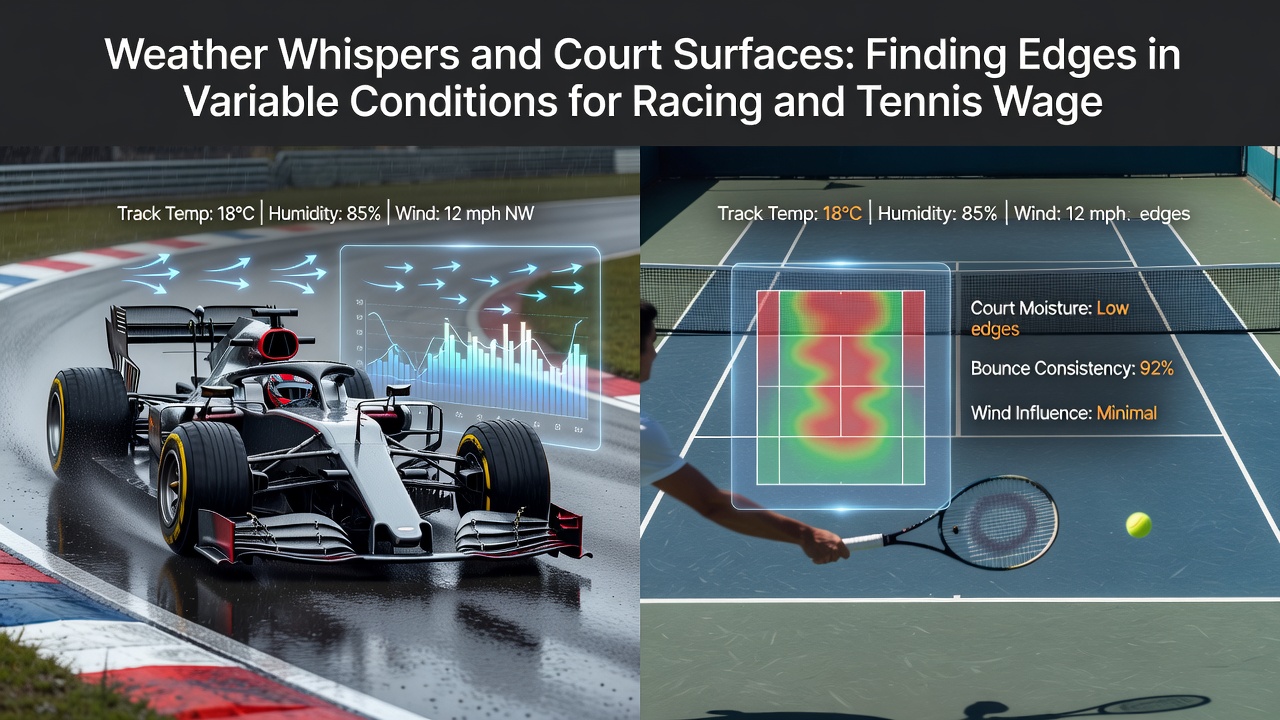
Wind speed and temperature combine to influence serve effectiveness and baseline play, particularly on outdoor hard courts where players adjust footwork and spin application. Figures released by the International Tennis Federation highlight that matches played above 28 degrees Celsius show elevated rates of unforced errors from players unaccustomed to heat stress, creating opportunities in over-under totals on games per set. June schedules often feature transitions between indoor and outdoor venues, amplifying the need for surface-specific weather modeling when evaluating accumulator selections across multiple matches.
Integrating Weather Data for Betting Decisions
Successful approaches combine historical performance data with current meteorological inputs to identify mispriced odds in both racing and tennis markets. Those who review past results under similar temperature and precipitation profiles discover repeatable patterns, such as favorites underperforming on drying turf after overnight rain or servers struggling with low ball flight in high humidity. Real-time feeds from weather services allow adjustments during live betting windows, where line movements frequently lag behind on-ground condition changes.
Case examples from recent tournaments illustrate how early recognition of wind shifts on grass courts led to value on return-game winners, while racing syndicates adjusted stakes after radar confirmed incoming showers at afternoon meetings. These methods rely on cross-referencing multiple data streams rather than single indicators, producing edges that compound across wagers placed on sprints, distance races, and tennis sets played under fluctuating conditions.
Conclusion
Variable weather continues to generate exploitable differences in horse racing and tennis through its effects on surfaces and athlete performance. Integration of meteorological reports with performance databases supplies the foundation for informed selections across June 2026 events, where conditions change rapidly and betting lines respond with varying degrees of efficiency. Those who maintain systematic tracking of these factors position themselves to capitalize on the resulting discrepancies in odds.